


The Yankees Have Plenty of Offseason Questions. Keeping Matt Blake Shouldn't Be One.
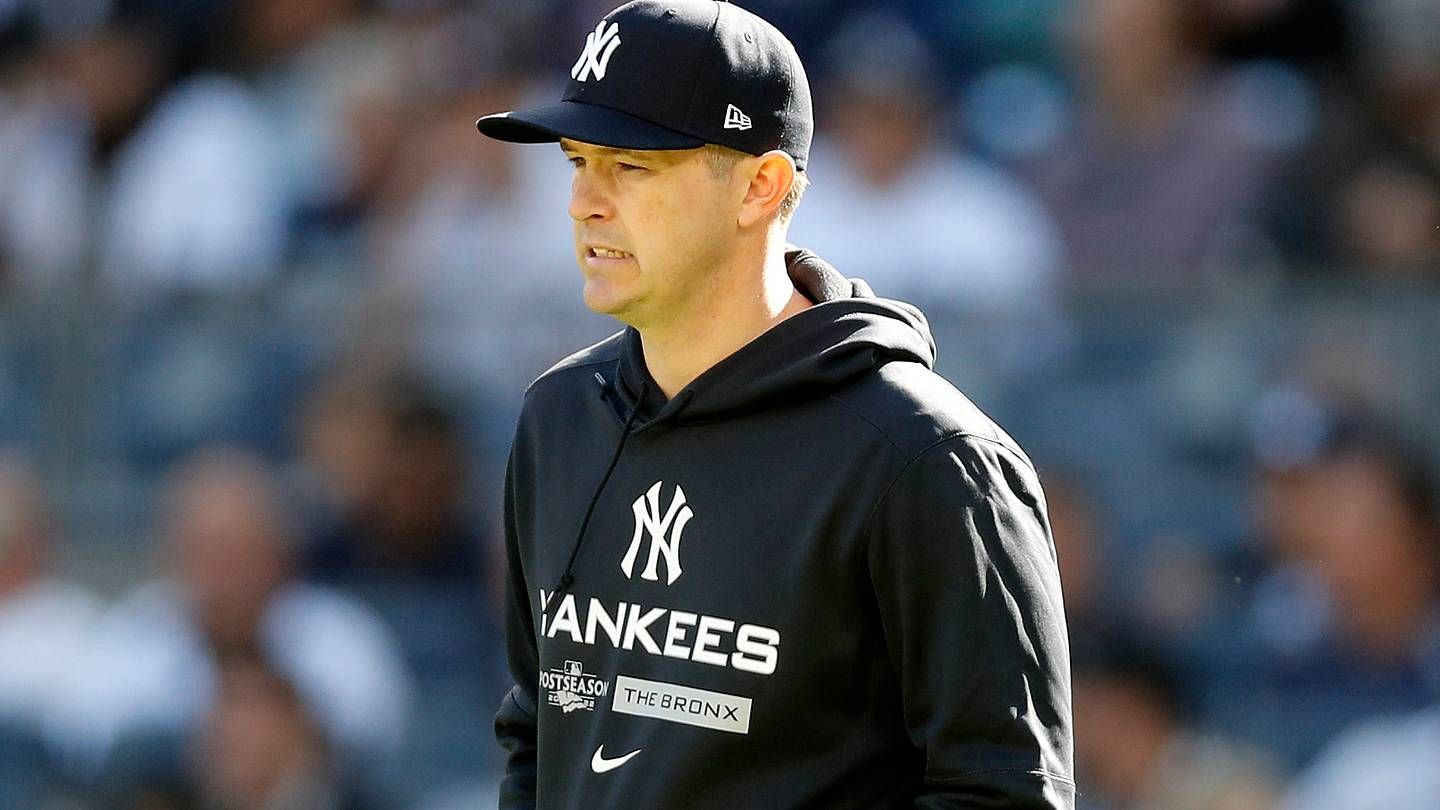 New York's pitching staff was the best in baseball in 2026, even with injuries and constant roster adjustments. As the Yankees prepare for another critical offseason, retaining the man helping hold it all together should be an easy decision.
 The Yankees are entering another offseason with plenty of questions to answer. Their lineup needs work, several roster decisions are looming, and another disappointing postseason has only intensified the pressure on an organization that hasn't won a World Series since 2009.
But while much of the conversation will revolve around which players the Yankees should pursue, there's one important piece of their organization they already have.
Matt Blake.

The Yankees pitching coach is approaching the expiration of his contract after overseeing a staff that finished the 2026 regular season with a Major League-best 3.23 ERA. That's an impressive accomplishment under normal circumstances. Considering the injuries, roster turnover and uncertainty surrounding New York's pitching staff throughout the season, it's even more significant. New York Post
And with another winter of potentially significant changes ahead, the Yankees should have little interest in allowing Blake to take his expertise elsewhere.
The numbers tell the story
For all the criticism directed at the Yankees this season, their pitching staff consistently gave them a chance to win.
New York's 3.23 team ERA led the majors, comfortably ahead of the Milwaukee Brewers, who finished second at 3.51.
The Yankees accomplished that despite dealing with injuries to high-profile starters, including Gerrit Cole, Max Fried and Carlos Rodón. They also relied on pitchers who entered the season without the established track records typically associated with a championship-caliber staff. New York Post
Cam Schlittler, Will Warren and Ryan Weathers became important contributors, giving the Yankees dependable innings while the organization navigated its pitching challenges.
Development like that doesn't happen entirely by accident.
Players deserve credit for their performance, but a coaching staff that consistently helps pitchers improve, adapt and contribute provides an advantage that cannot always be purchased on the free-agent market.
Under Blake, the Yankees have built a pitching operation capable of getting results from both established veterans and less proven arms.
That's especially valuable for a franchise whose championship expectations rarely leave much room for prolonged development at the major league level.
The Yankees can't buy their way out of every problem
The Yankees have never been afraid to spend money.
When a roster weakness becomes obvious, the conversation usually turns toward which established player the organization can acquire to address it.
That approach has its place. Elite talent costs money, and the Yankees should continue investing in players capable of helping them win a championship.
But building a successful pitching staff requires more than collecting expensive arms.
It requires an organization that can identify what makes each pitcher effective, recognize mechanical or strategic weaknesses, and make adjustments without sacrificing the qualities that made the player successful in the first place.
That's where Blake and the Yankees' pitching development system have demonstrated their value.
The organization has invested in analytics, scouting and player development, with Blake helping translate that information into practical results on the mound.
A high-priced free agent might improve one spot in the rotation. An effective pitching operation can influence an entire staff.
And over the course of a 162-game season, that impact adds up.
Continuity matters, especially now
The Yankees are also facing questions about the future of their coaching staff.
Manager Aaron Boone remains under scrutiny following another postseason exit, although he has one year remaining on his contract and is expected to return. Blake, meanwhile, is approaching free agency after serving as the team's pitching coach since 2020. Pinstripe Alley
There is an important distinction between evaluating a manager's overall performance and recognizing the strengths of the people working beneath him.
The Yankees can debate whether Boone is the right person to lead the club into its next championship pursuit. That conversation shouldn't automatically place every member of his staff under the same microscope.
Blake has earned consideration based on the performance of his pitching staff.
That doesn't mean every pitching decision has been perfect or that every pitcher has improved under his guidance. No coaching staff can make those claims.
But baseball organizations spend considerable resources trying to build sustainable systems that develop talent and maximize performance.
When one of those systems produces the best team ERA in the majors despite significant obstacles, preserving what's working should be a priority.
The real challenge is building around what already works
The Yankees' 2026 season ultimately ended without the championship their fans expected.
That failure deserves scrutiny, and the organization has legitimate weaknesses to address before next season.
The lineup needs greater consistency. Roster construction deserves another look. The front office must determine how to turn regular-season success into meaningful October results.
But improving a baseball team doesn't always require tearing apart everything that failed to produce a championship.
Sometimes the smarter approach is identifying which parts of the organization are functioning at a high level and making sure they remain in place.
For the Yankees, their pitching infrastructure belongs in that category.
Blake isn't the only person responsible for its success. Assistant pitching coach Desi Druschel, bullpen coach Preston Claiborne and the organization's broader player development staff have contributed to the results. New York Post
Keeping that group together won't guarantee another American League East title, let alone a World Series.
But losing an effective pitching coach while attempting to solve problems elsewhere would introduce unnecessary uncertainty into one of the team's most reliable strengths.
The Yankees have enough questions to answer this offseason.
Who will play third base? How will the lineup improve? Which free agents should return? Can the organization finally build a roster capable of finishing the job in October?
Those are complicated decisions.
Keeping Matt Blake shouldn't be.