


HE GOT FIRED… SO HE STARTED ESPN! — BILL RASMUSSEN WAS ABSOLUTELY OUT OF HIS MIND
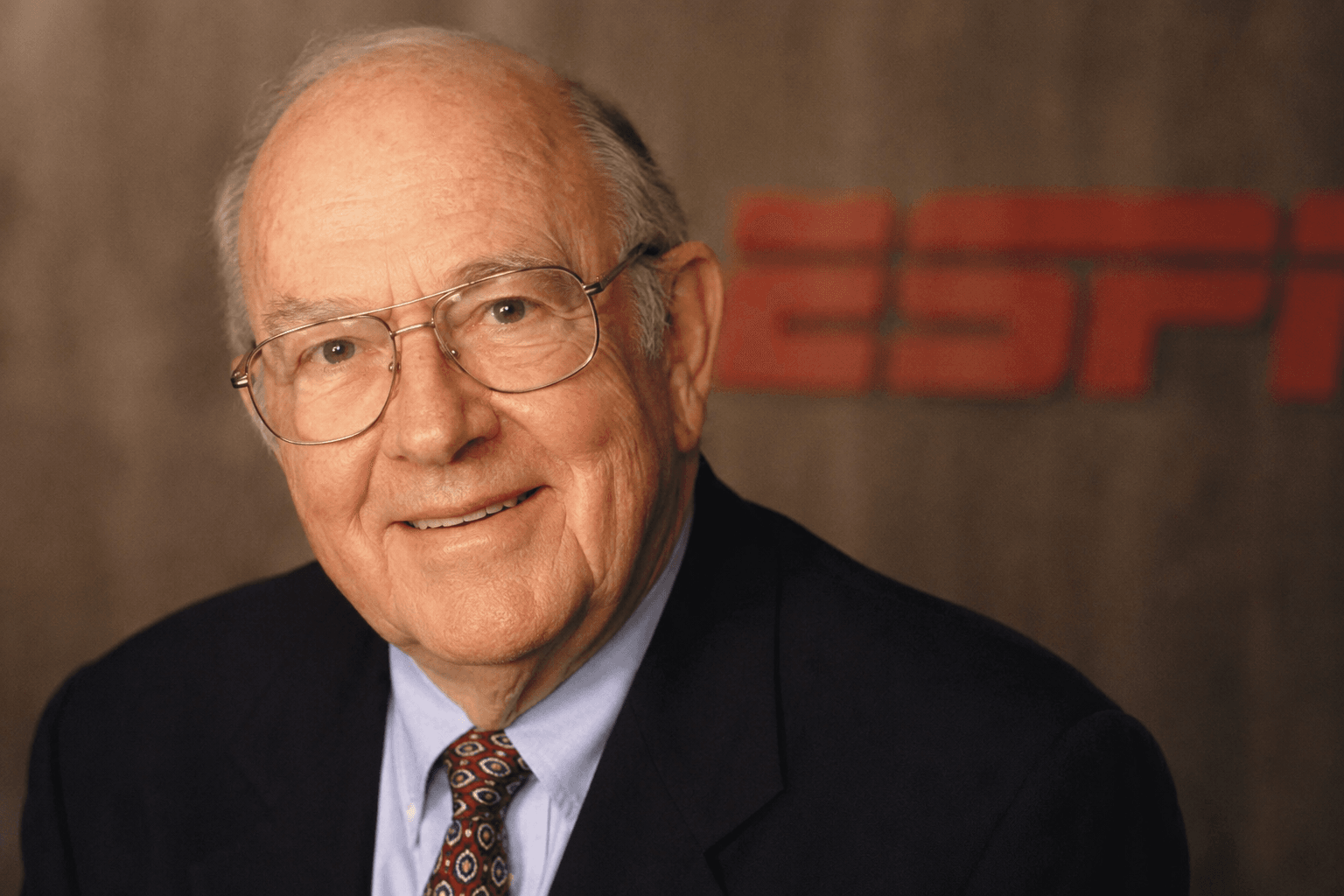 A tribute to Bill Rasmussen, the brains behind ESPN, a network that changed sports programming and entertainment forever...
 Let me get this straight.
Bill Rasmussen gets fired as communications director of the New England Whalers, and instead of doing what the rest of us would do, sit on the couch, complain to everybody we know, eat something unhealthy and start looking for another job, this man said:
“You know what? I’m going to start a 24-hour sports television network.”

WHO DOES THAT?!
That wasn’t a career change.
That was a mental health evaluation waiting to happen.
And somehow, THE MAN WAS RIGHT.
Bill Rasmussen, who died Tuesday at 93 from complications related to Parkinson’s disease, was the visionary behind the launch of ESPN in 1979.
Think about how crazy that idea sounded back then.
Twenty-four hours of sports.
On television.
Every day.
In 1979.
Back then, television networks basically told you, “Here’s your show. It starts at 8. Don’t ask for anything else.”
And Rasmussen comes walking through the door saying, “I want an entire channel that shows sports 24 hours a day.”
Everybody must have looked at him like he had just suggested putting Wi-Fi in a horse.
But Bill wasn’t kidding.
He and his son Scott started putting the pieces together. And because apparently Bill didn’t believe too strongly in the concept of financial responsibility, he maxed out his credit card and used a $9,000 advance to acquire satellite space.
Nine thousand dollars.
Today, $9,000 gets you a used car, a vacation you’ll regret, or approximately three Uber Eats deliveries if you’re really committed.
This man used it to help launch what would become one of the biggest sports networks on the planet.
That’s not gambling.
That’s “I either become a genius or I’m sleeping in my car” confidence.
Then came the hard part: convincing everybody else he wasn’t crazy.
Rasmussen knocked on doors. Sports leagues. Cable operators. Investors. Anybody who would listen.
Imagine walking into an office in 1979 and saying:
“I want to put sports on television 24 hours a day.”
The guy behind the desk probably looked up and asked, “Okay... what exactly are you going to show at 3 in the morning?”
Bill’s answer might as well have been, “I don’t know yet. But people are going to watch.”
And you know what?
HE WAS RIGHT.
On September 7, 1979, the Entertainment and Sports Programming Network, ESPN, was born.
And look at what happened.
The network people probably thought was insane became the place where America argues about everything.
Who’s the GOAT?
Who’s overrated?
Who’s underpaid?
Who should be traded?
Who should be fired?
Who had a bad game?
Who had a great game?
And, most importantly:
WHO THE HELL IS THE TALKING HEAD ON TV WHO JUST SAID THAT?!
Bill Rasmussen didn’t just help create a television network.
He helped create a 24-hour sports argument machine.
And some of us have made a career out of that.
YOUR BOY ERROL MARKS INCLUDED.
Think about the ripple effect.
Without Rasmussen, there is no ESPN as we know it. No SportsCenter as we know it. No Chris Berman. No nonstop NFL coverage. No endless NBA debates. No baseball highlights at 2 in the morning. No Stephen A. yelling. No analysts spending four hours trying to determine whether a quarterback is “elite.”
And maybe most importantly, no reason for all of us to scream at our televisions like the players can actually hear us.
Chris Berman, who joined ESPN just weeks after the network launched, once called Rasmussen ESPN’s “George Washington.”
I get it.
Because Rasmussen wasn’t simply a guy with an idea.
He had the courage, and maybe just enough insanity, to actually chase it.
He believed in something most people couldn’t see yet.
That’s what makes his story so incredible.
Sometimes the person everybody thinks is crazy is simply seeing the future before everybody else.
Rasmussen once said, “I believe the harder you work, the luckier you are.”
That’s a hell of a philosophy.
And clearly, the man worked.
He got fired.
He took the financial risk.
He knocked on doors.
He heard “no.”
I’m sure he heard “you’re nuts” a few times too.
He kept going.
Then, on September 7, 1979, ESPN happened.
So the next time you’re sitting on your couch at midnight watching a college football replay, SportsCenter highlights, an NFL debate, or some analyst arguing for the 47th time about the greatest quarterback of all time, remember the guy who helped make it possible.
Bill Rasmussen.
The man who basically responded to getting fired by saying:
“Fine. I’ll just create an entire sports television empire.”
That’s not a bad revenge story.
It’s the kind where you don’t even need to say anything.
You just sit back and watch what you created become part of American sports culture.
Rasmussen was 93.
He leaves behind a sports-media legacy that is damn near impossible to measure.
He didn’t just change television.
He changed the way sports fans consume sports, argue about sports, celebrate sports and, occasionally, completely lose their minds over sports.
And for guys like me who make a living doing exactly that, I owe the man some respect.
So, Bill:
Thank you.
And wherever you are, I hope there’s a television playing sports 24 hours a day.
Because let’s be honest.
YOU BUILT THE DAMN THING.
Rest in peace, Bill Rasmussen.
And thank you for giving the world ESPN.